Whoever asks the question has already designed
Framestorming and five more methods for reframing a problem before solving it
- Number
- Nr. 007
- Type
- writing
- Year
- File
- framestorming_1_1_1_1_1.jpg
There are dozens of process models for design. The British Design Council’s Double Diamond, the Stanford d.school sequence, the Ellen MacArthur Foundation’s circular design model, the systems design framework, the VDI methodology. The first version of this article compared them, with pros and cons. I now think the comparison matters less than it seems. All these models begin with a phase in which the problem is defined, and all assume you are done with it at some point. But the decisive work happens right there. Whoever asks the question has already designed.
The slow elevator
In 2017 Thomas Wedell-Wedellsborg told a story in the Harvard Business Review that has turned up in every workshop on the subject since. The tenants of an office building complain that the elevator is too slow. The obvious solutions: a faster motor, a second elevator, better control software. All expensive. The building management puts up mirrors next to the elevator instead. The complaints drop off. The elevator isn’t any faster, but the wait feels shorter because there is something to look at — yourself.
The problem wasn’t speed but the boredom of waiting. Whoever sees that has essentially done the design. The mirrors are only the execution.
Framestorming
The simplest method for reaching such insights is called framestorming. It is brainstorming, but about questions, not answers. The group collects as many formulations of the problem as possible before a single solution is allowed.
How it works: the task from the brief is written on the wall in one sentence. In ten minutes, everyone writes as many alternative versions of that sentence as they can, one per note. Then the notes are grouped — not by quality but by direction. At the end, the group picks two or three formulations pointing in different directions and continues working with all of them.
An example from traffic planning: a city has congestion. The usual question is how to get more cars through the streets. Other versions: how do we reduce the reason to drive at rush hour? How does the bicycle become more attractive than the car? How does time in traffic become useful? Each question leads to a different project.
The limit of the method: it takes time, and it takes people who can bear an hour in which nothing gets solved. In organisations that expect results at the end of a workshop, it often gets cut short, and then only the first question remains.
Five more tools
Framestorming is a frame. These five methods fill it.
How might we … Min Basadur used the formula at Procter & Gamble to steer teams towards an open, positive question when defining problems; IDEO later popularised it. It has three parts, each with a function: “how” assumes there is a solution. “Might” allows that it is still uncertain. “We” makes the group responsible. The limit: the formula is often used to disguise a ready-made solution as a question. “How might we build an app that …” is not an open question.
The five whys. From the Toyota Production System, described by Taiichi Ohno: you keep asking for the reason until you reach a cause you can actually change. Five isn’t a fixed number but a reminder not to stop too early. The limit: the method looks for one cause and easily overlooks that there are several.
The abstraction ladder. Write the problem in the middle. Going up, ask “why?” and become more general: “build a faster elevator” becomes “make the wait more bearable”, and above that “make everyday life in the building more pleasant for tenants”. Going down, ask “how?” and become more concrete. The right question usually lies one or two rungs above the one you started with.
The positive exception. A tool from Wedell-Wedellsborg’s list: look for the cases in which the problem doesn’t occur. When does nobody complain about the elevator? Perhaps when people wait in pairs and talk. The exception often reveals what it is really about.
The foreign frame. The strongest and hardest method, described by Kees Dorst in Frame Innovation (2015). You take the problem and look at it through a frame from an entirely different field. His best-known example comes from Sydney. The nightlife district of Kings Cross had a violence problem, and the city treated it as a matter of law and order, with more police. The designers of the Designing Out Crime Research Centre found that most people there weren’t criminals but young people wanting a good night out. They framed the district as a music festival: a place where large crowds get along peacefully if paths, toilets, transport and care are right. Over five years the frame produced around twenty solution directions, from better transport after midnight to guides on the street.
Why this is design
You could take all this for management. I see it as the most design-like activity of all. A frame is a form for a problem, and as with any form there are better and worse ones, not right and wrong ones. The music festival in Kings Cross is not a logical conclusion from the data. It is a design.
For my own work, this has a practical consequence. A readymade begins with the question of what a thing actually is. Is the warning tape a barrier or an ornament? Is the watch a measuring instrument or a piece of jewellery? That question is a reframing, only on the object instead of the problem. The three percent I change afterwards is the execution. The work has already been done.
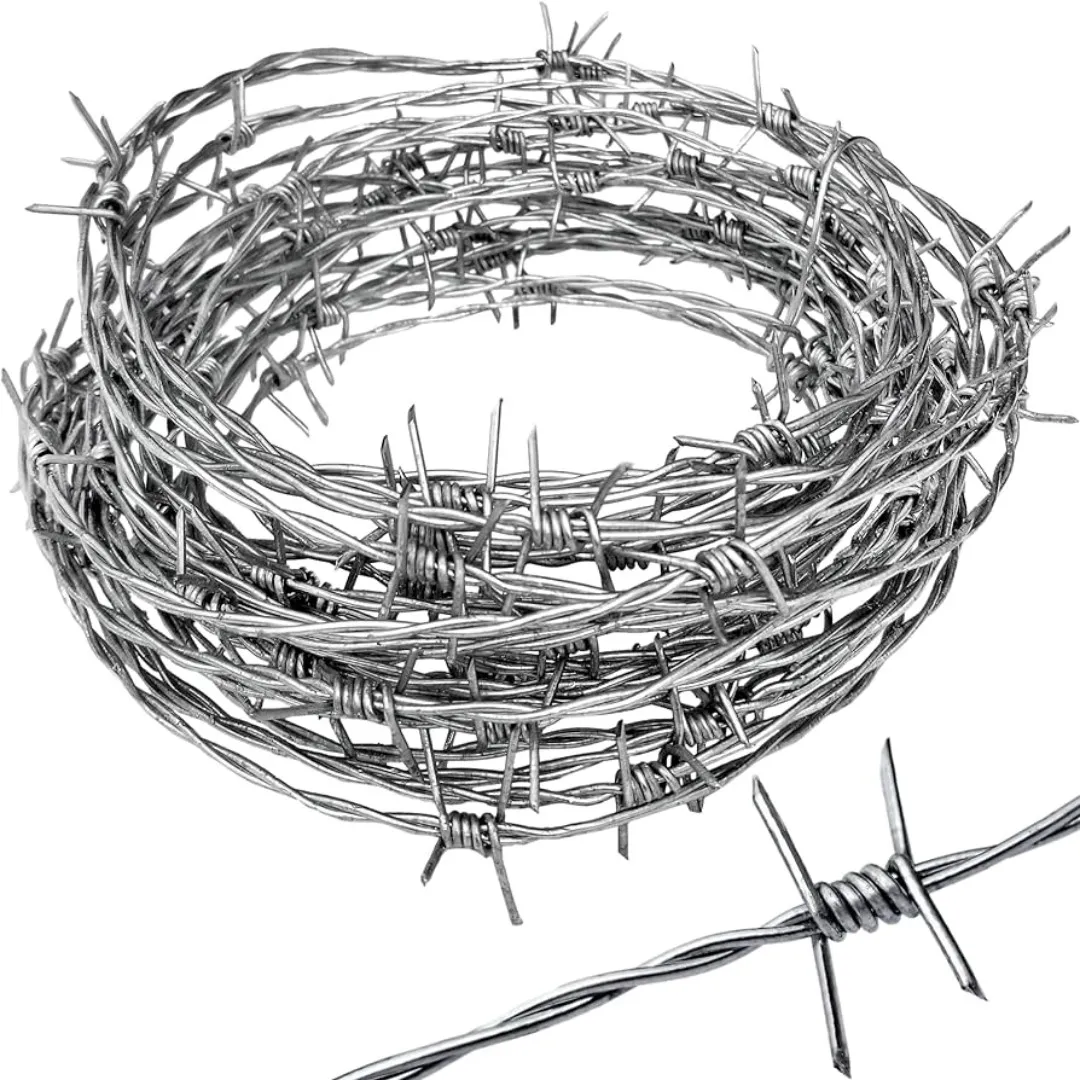 Fig. 1 — Barbed wire, coiled: a barrier that looks like a wreath. The same question as with the warning tape, asked of a different thing.
Read the next brief twice. The second time, don’t underline the task but the word that frames it. That’s where you start.