Public opinion is designed
Edward Bernays versus James Grunig: two models of public relations and what designers can learn from them
- Number
- Nr. 005
- Type
- writing
- Year
- File
- propaganda-bernays_1.jpg
On Easter Sunday 1929, 31 March, young women walking in the Easter Parade on New York’s Fifth Avenue lit cigarettes in front of the photographers. At the time, women barely smoked in public; it was considered indecent. The next day the papers reported that they had lit torches of freedom. The image travelled across the country. The American Tobacco Company had commissioned it; a man named Edward Bernays had staged it.
I’m not telling the story as a scandal — it has long been one. I’m telling it because it shows what public relations actually is. Not a press release, not contact with journalists, not an image brochure, but design: the design of situations in which people form their opinions.
Bernays: consent as a design
Bernays, a nephew of Sigmund Freud, published a slim book called Propaganda in 1928. It opens by stating that the conscious and intelligent manipulation of the organised habits and opinions of the masses is an important element in democratic society. The sentence is not meant ironically. Bernays believed modern societies were too complex for every individual to form their own judgement. Someone had to make the selection, and better a responsible adviser than chance.
In 1947 he gave the method a name: the engineering of consent. The word engineering is precise. Bernays saw himself not as an advertiser who phrases messages but as a constructor who creates conditions. He got doctors to recommend a hearty breakfast so that more bacon would sell. He called on children to enter soap-carving contests. He got architects to plan houses with bookshelves so that publishers would sell books. He rarely sold a product directly. He changed the environment in which the product became a matter of course.
In 1961 the historian Daniel Boorstin called such planned events pseudo-events: they don’t happen; they are staged so that they get reported. The 1929 Easter Parade is one of the earliest and cleanest examples.
Read Bernays as a craftsman rather than a villain, and three tools can be extracted that are still in almost every campaign today.
The third voice. Bernays rarely let the company speak. He found doctors, architects, teachers and celebrities who said what the company would have liked to say. A recommendation is more credible when it doesn’t come from the sender. In design that means: testimonial, seal of quality, curator’s text.
The environment. He didn’t change the product but the space in which it is used. Whoever plans houses with bookshelves sells books without advertising them. In design that means: retail interiors, trade fair stands, user interfaces. Whoever designs the space designs the behaviour in it.
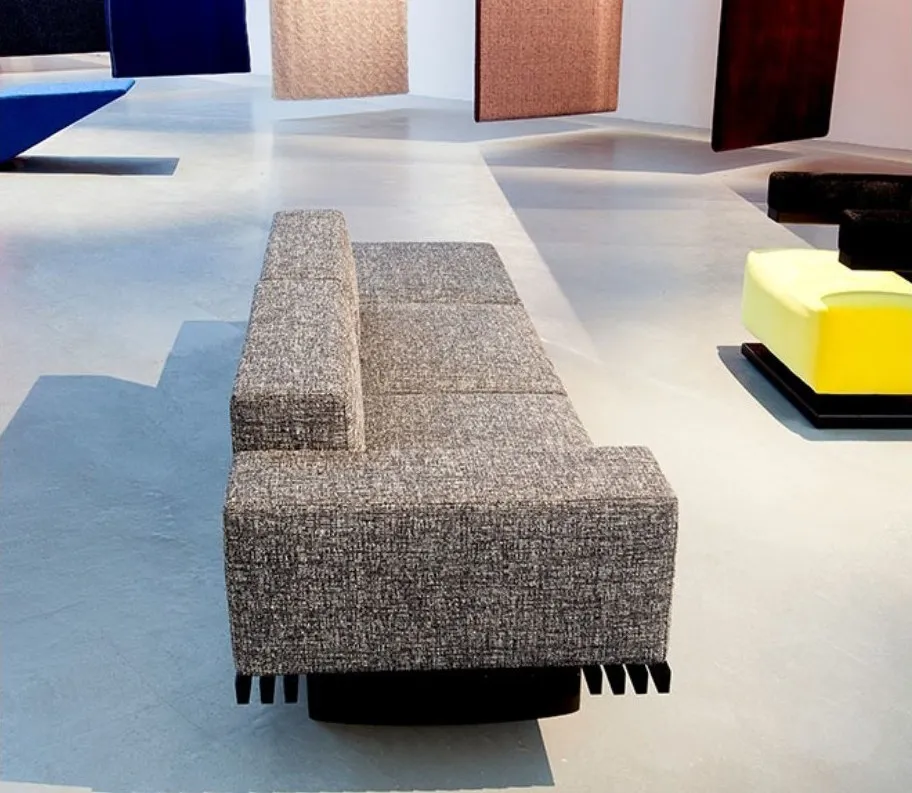 Fig. 1 — A sofa in an exhibition space. Nothing about the furniture has changed; the colour panels, plinths and paths around it decide how you look at it.
The event. He created occasions that had to be reported because they delivered images. The cigarette in a woman’s hand at the Easter Parade is an image that spreads itself. In design that means: opening, launch, installation — anything that wants to be photographed.
None of these tools is immoral in itself. A curator’s text can open up a work, a shop can make buying easier, an event can bring people together. They become a problem when used to hide who is speaking and what they want.
What a designer sees in it
To me, the torches stunt is a readymade. Bernays took a sign everyone in America knew — the torch of the Statue of Liberty — and women’s struggle for equality, which had won the vote ten years earlier. He shifted the meaning of the cigarette by a few percent: from indecent vice to sign of emancipation. He didn’t have to invent anything. He only had to place two familiar things side by side so that a new meaning emerged.
That is exactly the method I call Readymade ± 3 %, applied to get people smoking. I think it’s more honest to say so than to pretend design has nothing to do with manipulation. The same technique that makes a poster witty can make a lie believable. The difference doesn’t lie in the technique.
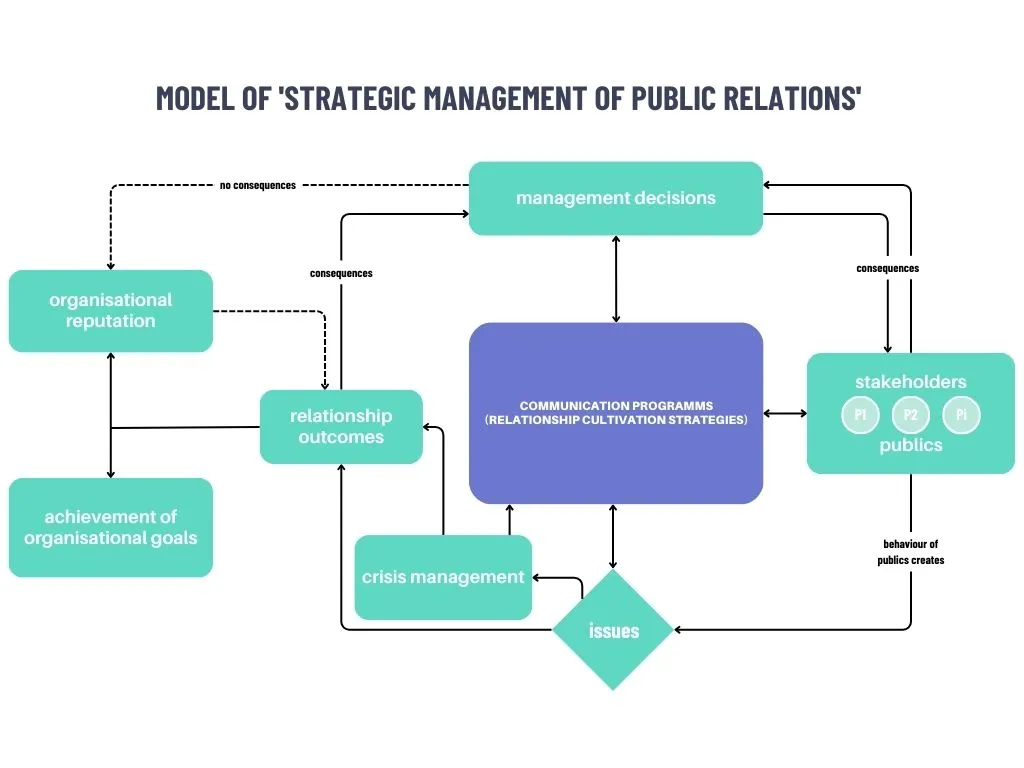 Fig. 2 — A model of strategic PR management: decisions, programmes, relationships, reputation. It looks tidy; what happens inside the arrows is design.
The other tradition: Ivy Lee
Bernays wasn’t the first. A good twenty years before the Easter Parade, in 1906, a Pennsylvania Railroad train crashed near Atlantic City. Railway companies were used to keeping accidents quiet. Their adviser Ivy Lee persuaded them to do the opposite: inform journalists before they heard it elsewhere. The statement he wrote is often considered the first press release. In the same year Lee published a Declaration of Principles, the first statement that PR advisers have a responsibility to the public that goes beyond their duty to the client.
Lee was no saint. In 1914, after the Ludlow Massacre, he polished the image of the Rockefeller family, and in the 1930s he advised IG Farben. But his method differed from Bernays’. Lee worked with disclosure: he advised John D. Rockefeller Jr. to visit the miners in Colorado, inspect conditions and listen, and he had the visits photographed. That is staged too. But the staging consists in showing something that is actually happening, not in inventing a meaning.
So from the very beginning, two traditions stand side by side. One designs situations so that people believe something. The other designs situations so that people see something. Both are design, and both can be abused.
Grunig: relationship instead of production
The discipline took a long time to free itself from Bernays. The clearest counter-design came from James Grunig and Todd Hunt in 1984, in Managing Public Relations. They distinguished four models. Press agentry: attention at any price, truth secondary. Public information: factual information, but in one direction only. Two-way asymmetrical: you research the public in order to persuade it better — that is Bernays. Two-way symmetrical: organisation and public negotiate, and both can change in the process.
The fourth model is Grunig’s ideal. The organisation doesn’t listen to sharpen its message but to possibly change its conduct. The Public Relations Society of America adopted this stance in its 2012 definition: public relations is a strategic communication process that builds mutually beneficial relationships between organisations and their publics.
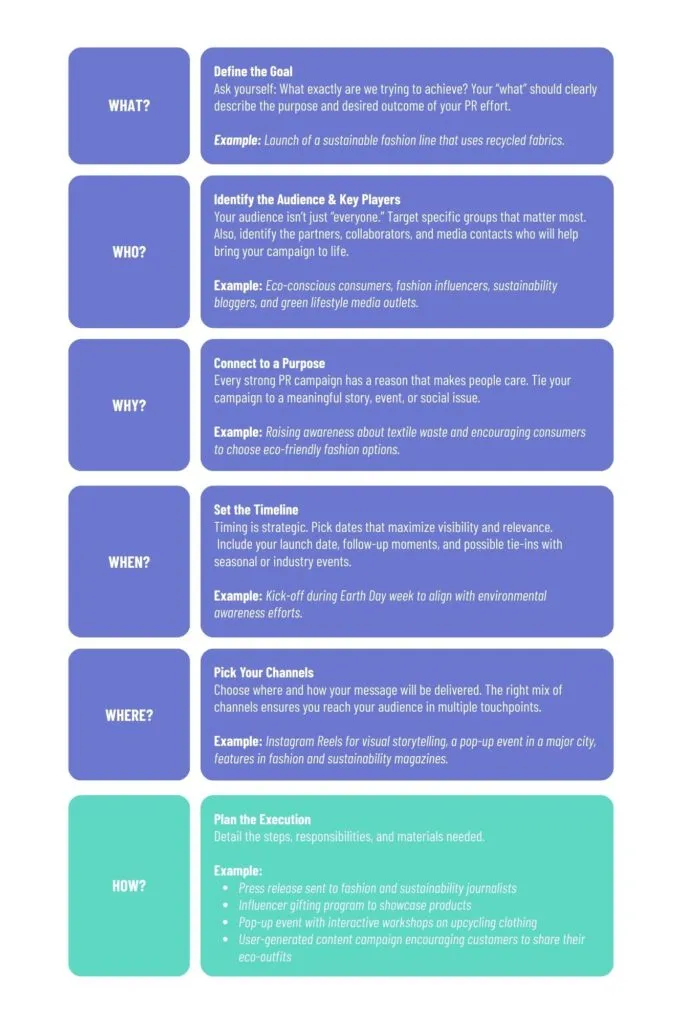 Fig. 3 — The 5W1H questions (What, Who, Why, When, Where, How) as a planning grid. Useful, as long as you remember that “Who” is allowed to ask back.
Why symmetry is rare
There is an obvious objection to Grunig: the symmetrical model describes how PR should be, not how it is. Hardly any organisation pays a department to be talked round by the public. Grunig and his co-authors later conceded as much and spoke of mixed motives: organisations want to persuade and to listen at the same time, and good PR keeps both in balance.
I still find the distinction useful, precisely for designers. It provides a question you can put to any design: is there provision here for feedback that could change something? A campaign that only transmits is Bernays. A wayfinding system that takes in complaints and adapts is Grunig. A package that says how to reach the manufacturer is a small step from one to the other.
Read Bernays today and you recognise almost everything, only faster. The doctor recommending a breakfast is now called an influencer and has a discount-code banner under the video. The pseudo-event is a trend that pretends to have arisen by itself. The environment in which a product becomes a matter of course is a feed whose order is set by a machine.
What’s new is not the technique but the volume. Bernays needed weeks to prepare an Easter Parade, book photographers and convince newspapers. Today a pseudo-event can be produced in an hour and spread a million times in a day. That makes the symmetrical question more urgent, not obsolete. The cheaper it is to manufacture consent, the more valuable communication becomes that demonstrably listens.
Designers are already in PR
Many designers think of PR as something other people do — the ones with the press list. That is a mistake. Whoever builds a trade fair stand designs a situation in which people form a judgement. Whoever stages an event, for a hundred guests or four thousand, produces a pseudo-event in Boorstin’s sense: it takes place so that it gets talked about, photographed, reported. Whoever designs a logo for a public authority helps decide how approachable that authority seems.
That is no reason for a bad conscience, but for a precise stance. Bernays showed how much power lies in designing situations. Grunig showed that this power can be shared. The question for every project is which end of the spectrum you want to work at — and whether the client knows.
Before you plan your next staging, write down one sentence on what the audience would be allowed to change in it. If you can’t think of one, you know whose tradition you are working in.